
How to Choose the Right Zoom Plan Based on Team Size
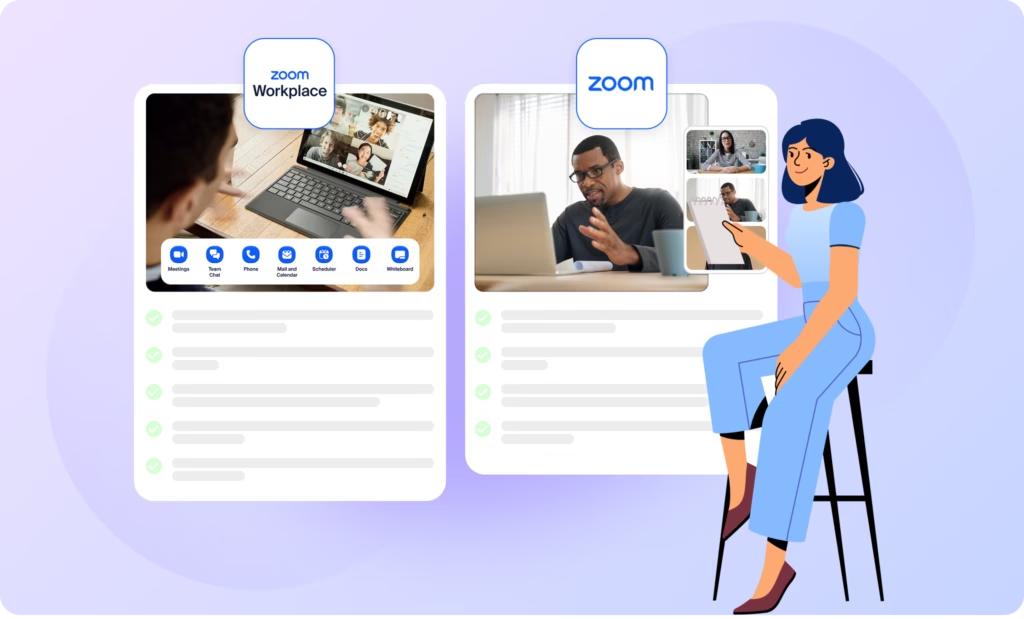
In today’s hybrid and digital-first work culture, Zoom has become one of the most essential communication tools for Indian businesses. From startups and freelancers to large enterprises and institutions, Zoom powers daily meetings, interviews, training programs, webinars, and customer interactions. However, as Zoom now offers multiple plans under Zoom Workplace and Zoom One, many businesses struggle with one important decision-how to choose the right Zoom plan based on team size. Selecting the right plan is not just about cost; it directly impacts productivity, collaboration quality, scalability, security, and long-term return on investment.
Choosing a Zoom plan without properly evaluating your team size and communication needs often leads to limitations such as short meeting durations, missing collaboration tools, lack of admin control, or unnecessary overspending. The right Zoom plan, on the other hand, ensures smooth internal communication, professional client interactions, centralized management, and room for business growth. This guide will help Indian businesses clearly understand how to match their team size with the most suitable Zoom plan.
Zoom today is no longer limited to video meetings. It has evolved into a powerful unified communication ecosystem that includes Zoom Meetings, Zoom Phone, Team Chat, Whiteboard, AI Companion, Webinars, and Contact Center solutions. As your team grows, your communication demands also grow in complexity. A five-member team has very different needs compared to a 50-member organization or a 500-employee enterprise. That is why choosing the right Zoom plan based on team size is a strategic business decision.
For very small teams and individual professionals, Zoom Basic or entry-level paid plans are usually sufficient. These teams mainly use Zoom for client calls, internal discussions, and short virtual meetings. Their priorities are affordability, reliability, and ease of use rather than advanced collaboration or automation.
Best suited for teams of 1-10 members:
- Freelancers and consultants
- Early-stage startups
- Small service businesses
- Solo trainers and coaches
- Home-based professionals
As businesses move into the small business stage with 10 to 30 employees, communication needs expand rapidly. Teams now require longer meeting durations, cloud recordings, departmental coordination, internal chat, and basic admin control. This is where Zoom Pro or Zoom Business plans become essential. These plans support structured collaboration without introducing enterprise-level complexity.
Why Zoom Pro or Business works for 10-30 users:
- Unlimited long-duration meetings
- Cloud recording for training and compliance
- Centralized user management
- Team collaboration features
- Integration with Google Workspace and Microsoft 365
For growing teams between 30 and 100 members, business communication becomes more layered. Multiple departments operate simultaneously, customer-facing teams grow, and internal coordination becomes critical. At this stage, Zoom One or Zoom Business Plus plans offer the best balance between cost, capability, and scalability. These plans combine meetings, cloud calling, team chat, whiteboard, and AI-powered productivity tools into one unified platform.
Ideal for teams of 30-100 employees because it offers:
- Zoom Meetings + Zoom Phone in one platform
- Internal team chat and collaboration
- AI-powered meeting summaries and transcriptions
- Role-based admin controls
- Higher security and scalability
- Better control over internal and external communication
For large organizations with 100 to 250 employees, communication becomes mission-critical. These organizations often operate across multiple locations, departments, and client segments. They require strong governance, consistent communication standards, higher user limits, compliance-grade security, and detailed analytics. Zoom One Business or Enterprise-level plans ensure that communication remains smooth, secure, and fully scalable.
Why mid-to-large companies prefer Zoom One Business or Enterprise:
- Higher participant capacity for meetings and webinars
- Advanced security and compliance controls
- Centralized deployment and license management
- Company-wide collaboration visibility
- Cloud calling for sales and support teams
- Dedicated enterprise-level support
For enterprises with more than 250 employees, Zoom becomes the backbone of communication infrastructure rather than just a meeting tool. These organizations deal with large customer bases, partner ecosystems, complex IT environments, and strict regulatory requirements. Zoom Enterprise and Zoom One Enterprise plans provide maximum flexibility, performance, custom security frameworks, and global communication capabilities.
Enterprise Zoom plans are best for:
- PAN-India and global operations
- Large customer support teams
- BFSI, healthcare, and government projects
- High-volume conferencing and telephony
- Compliance-driven industries
One of the most important factors when choosing the right Zoom plan based on team size is how your organization uses meetings. If meetings are occasional and short, lower plans are usually sufficient. But if your business depends heavily on daily sales calls, recruitment interviews, training programs, and client demos, you need longer meetings, cloud recording, webinar tools, and admin-level reporting.
Another critical factor is whether your team needs business calling through Zoom Phone. Organizations above 25 employees benefit significantly from integrated cloud telephony. Sales teams, customer support departments, and remote employees can all manage calls from one platform without relying on traditional PBX systems. This reduces infrastructure costs and improves responsiveness.
Zoom Phone is especially useful for:
- Sales teams
- Customer support operations
- Remote and hybrid workforce
- Multi-branch businesses
- Service-driven organizations
AI-powered productivity is another feature that becomes more valuable as team size increases. Smaller teams may handle manual documentation, but large teams cannot afford such inefficiency. Zoom’s AI Companion automatically generates meeting summaries, highlights key decisions, and creates action items. For leadership and operations teams, this improves visibility and execution speed without additional software.
Security requirements also grow with team size. Small teams may prioritize convenience, but organizations above 50 users must think about data protection, access control, audit trails, and regulatory compliance. Higher Zoom plans offer advanced encryption, centralized policy control, and compliance-ready infrastructure, which is essential for BFSI, healthcare, education, legal, and enterprise IT environments.
Integration is another decision-making factor. Small teams may only use email and cloud storage, but mid-sized and large organizations rely on CRM tools, HR software, ERP systems, and marketing platforms. Choosing the right Zoom plan ensures seamless integration with tools like Salesforce, Zoho, HubSpot, Google Workspace, Microsoft 365, Slack, and ERP systems.
Cost is always a major concern for Indian businesses. Many organizations focus only on per-user prices, but the smarter approach is to analyze total cost of ownership. A Zoom One plan may cost more upfront, but it replaces separate expenses for video meetings, chat apps, phone systems, webinars, and customer communication tools.
Zoom One helps reduce long-term costs by eliminating:
- Separate telecom systems
- Third-party chat tools
- Standalone webinar software
- Multiple vendor contracts
- Hardware-based phone infrastructure
One common mistake businesses make is choosing a low-tier Zoom plan without considering future growth. Many Indian startups double their team size within a year. Constant upgrading leads to operational disruption and unpredictable budgeting. The smarter strategy is to select a Zoom plan that supports at least the next 12 to 24 months of growth.
Another frequent mistake is running multiple Zoom plans across departments without centralized control. This results in security gaps, billing confusion, and inconsistent user experience. A centrally managed Zoom environment with a single admin dashboard is always recommended once the team crosses 20 to 25 users.
Quick Zoom Plan Recommendation by Team Size
- 1-10 users: Zoom Basic or Zoom Pro
- 10-30 users: Zoom Pro or Zoom Business
- 30-100 users: Zoom Business Plus or Zoom One
- 100-250 users: Zoom One Business or Enterprise
- 250+ users: Zoom Enterprise or Zoom One Enterprise
The final conclusion is simple. There is no one-size-fits-all Zoom plan. The right Zoom plan depends completely on your team size, meeting frequency, collaboration needs, calling requirements, security expectations, and future growth plans. Small teams should focus on affordability and simplicity, growing teams should prioritize collaboration and scalability, and large organizations must invest in enterprise-grade unified communication.
If your business is currently evaluating how to choose the right Zoom plan based on team size, working with an authorized Zoom partner in India can help you avoid costly mistakes. A certified partner can assess your exact needs, forecast your growth, recommend the most cost-efficient plan, and provide local onboarding, deployment, and long-term support.
Need Zoom pricing, plans or partner support in India?
Cloudfy Systems helps Indian businesses compare Zoom pricing and plans, buy through an authorised Zoom partner in India, and set up Zoom Meetings, webinars, recordings and admin controls.
FAQ
Which Zoom plan is best for a small Indian team?
Zoom Pro is usually suitable for smaller teams that need longer meetings, cloud recording and AI-assisted meeting features.
When should a company choose Zoom Business?
Zoom Business fits teams that need more users, larger meetings, admin controls and managed business collaboration.
Can Cloudfy help with Zoom pricing and plans in India?
Yes. Cloudfy helps compare annual Zoom pricing and plans, confirm India quotes and support deployment.
FAQ
Which Zoom plan is best for a small Indian team?
Zoom Pro is usually suitable for smaller teams that need longer meetings, cloud recording and AI-assisted meeting features.
When should a company choose Zoom Business?
Zoom Business fits teams that need more users, larger meetings, admin controls and managed business collaboration.
Can Cloudfy help with Zoom pricing and plans in India?
Yes. Cloudfy helps compare annual Zoom pricing and plans, confirm India quotes and support deployment.